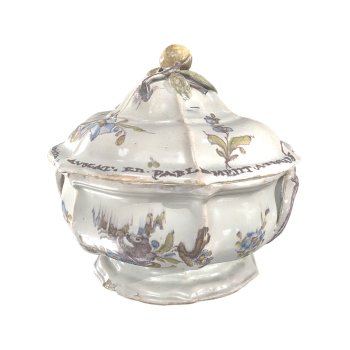
Edward Noerplin's' The Flower Girl '

Edward Noerplin's' The Flower Girl '

This fine porcelain hand-painted flower vase designed by Edward Noerplin was created between 1902 and 1916 and produced in Parthenay, France. Known for its exquisite craftsmanship and color matching. The overall color is pink, with three decorative tubular nozzles at the top. Both sides are equipped with brown handles, and the center is decorated with a relief angel pattern on a white background. The bottom of the flower vase is hollowed out. There are currently two damages, one at the mouth and the other at the bottom. It is currently held in the collection of the Parthenay Museum of Art and History in France.
Ceramic flower pot designed by Henry Amiro

Ceramic flower pot designed by Henry Amiro

The ceramic flowerpot designed by Henry Amiro is a work from the late 19th century to the early 20th century, made of ceramics using Parthenay's fine molds. The feature is that the bottom of the pot is decorated with a sticker strip of sweet potato leaves, and the whole is covered with patterns of snails, lizards, butterflies, mythical animals, and vines. The edges of the flowerpot are thin and straight, decorated with black underglaze color. The colors are mainly dark blue and aquamarine, giving people a sense of tranquility and depth. The art and history museum currently located in Parthenay, France.
Long Tongguan Kiln Ceramic Research Institute

Long Tongguan Kiln Ceramic Research Institute

Dragon "is a ceramic artwork collected by the Tongguan Kiln Ceramic Research Institute, showcasing the image of the dragon in traditional Chinese culture with its exquisite craftsmanship and unique design. As an important representative of Chinese ceramic art, Tongguan Kiln is renowned for its long history and exquisite craftsmanship. Cleverly combining the majesty of dragons with the delicacy of ceramics, through the artist's skillful hands, the form, scales, hair and other details of dragons are vividly depicted. The dragon symbolizes power, nobility, and good luck in Chinese culture, and is a symbol of auspiciousness. This artwork is not only a work of art, but also an inheritance of traditional Chinese culture.
Colorful Carving Cup - American Bonn Collection Series

Colorful Carving Cup - American Bonn Collection Series

The colored carved cup is a pottery artwork from the Bonn Collection in the Americas. The body of this cup is decorated with finely carved geometric patterns, using colors such as green, brown, yellow, and blue to showcase rich visual layers and artistic expression. The origin of the cup is still unclear, which adds a touch of mystery to it. It is not only a display of ancient craftsmanship, but also an exploration of color and shape aesthetics.
Colored Pottery Cup - American Bonn Collection Series

Colored Pottery Cup - American Bonn Collection Series

The colored pottery cup with painted face is a colorful pottery item in the Bonn Collection of America. This cup shaped vessel has two vertically mounted handles. The opening edge of the vessel is irregular, with a wreath composed of vertical lines drawn alternately in ochre, red, and black colors. The ochre colored face placed between the two handles is painted with X-shaped eyes and a mouth with a well-defined nose. This face looks clear and cheerful, with wide open eyes, a bean shaped smile, and dimples. The diamond shaped eyes are framed by black C-shaped lines, with prominent eyebrows on top. Belonging to Teddy Hahn's collection.
Lion candle holder

Lion candle holder

The outstanding works of Chinese arts and crafts master Hu Wuqiang were carefully crafted by Changsha kiln. The clever combination of the majestic image of lions and the practical function of candlesticks showcases the unique charm and profound cultural heritage of Chinese ceramic art. With its exquisite craftsmanship and profound understanding of traditional culture, this lion shaped candlestick was created. Lions symbolize majesty and strength in Chinese culture and are often used as totems for protection and decoration. Not only does it give people a strong artistic impact visually, but it also conveys a positive and uplifting spirit culturally. Changsha kiln, as an important representative of Chinese ceramic art, is renowned for its long history and exquisite craftsmanship.
Vase made by Edward Knopfflin (Part 1)

Vase made by Edward Knopfflin (Part 1)

The vase made by Edward Knopfflin is an exquisite fine porcelain artwork, created between 1902 and 1916, produced in Palatine, France. Overall, the vase has a flat bottom, slightly expanded middle, rounded top, and then extends upwards to form a higher neck, ending with a wide edge. Two handles decorated with reed patterns connect the middle and upper ends of the neck. In terms of decoration, the vase adopts a hollow design inspired by plants, with green and orange pink as the main colors, and is also decorated with two three-dimensional crayfish. It is one of the collections of the Parthenon Museum of Art and History.
Vase made by Edward Knopfflin (Part 2)

Vase made by Edward Knopfflin (Part 2)

The decorative vase made by Edward Knopfflin is an exquisite fine porcelain artwork, created between 1902 and 1916, produced in Paltenay, France. The main body of the vase is decorated with two oval reliefs, including a white high relief female side image, connected by two deep green flower garlands. In addition, the neck and base are striped and adorned with light reddish brown dots. The two handles connecting the neck and the top of the bottle are placed on two decorative pieces shaped like a ram's head. The color scheme of the entire vase ranges from shallow green to deep green, as well as old rose, white, and ochre. It is a collection of the Parthenone Museum of Art and History.
Geometric Pattern Ancient Pottery - Bonn Collection Series in the Americas

Geometric Pattern Ancient Pottery - Bonn Collection Series in the Americas

The geometric patterned container in the Bonn Collection of America is an ancient pottery with a mysterious origin. Its specific place of origin is not yet clear, which adds a sense of mystery and research value to it. The surface of the container is decorated with geometric patterns, which not only showcase the artistic aesthetics of ancient people, but may also contain specific cultural or symbolic meanings. Through the study of geometric patterns, scholars can gain a deeper understanding of the artistic styles, religious beliefs, and social structures of ancient civilizations.
The flower bed made by Edward Knopfflin

The flower bed made by Edward Knopfflin

The flower bed made by Edward Knopfflin is a ceramic artwork decorated with a duck pattern, created between 1902 and 1916 and produced in Palatine, France. Not only is it a practical gardening container for growing flowers and plants, but it is also an artwork showcasing Knopfflin's exquisite craftsmanship. The duck decoration on its surface adds natural beauty, reflecting the artist's love for natural themes and attention to details. As one of the collections of the Peltier Museum of Art and History, it not only enriches the museum's collection, but also showcases the tradition and charm of Peltier ceramic art to visitors.
Khmer Civilization Container

Khmer Civilization Container

It is an ancient Khmer civilization pottery from the 1st century BC, currently housed in the Minneapolis Museum of Art. This container is a representative of Khmer art and craftsmanship, reflecting the achievements of Khmer culture in pottery making technology at that time. The shape, decoration, and materials of the container may reveal the social customs, religious beliefs, and aesthetic tendencies of the time.
Laconia Kilix Cup

Laconia Kilix Cup

It is an ancient Greek pottery collected in the Academic Art Museum of Bonn University. Made between 550 BC and 530 BC, originating from the ancient Laconia region where Sparta was located. Known for its white coating and decorations concentrated on the inside of the bowl. The outer side of the cup presents a beam of light and several dark stripes of different widths. The inside displays a scene depicting two bearded, naked men talking. The smaller man on the left has a long beard and holds a Cantalos in one hand. The larger man on the right has a short beard and is not carrying any items. The blank space around the man is filled with bird and floral elements
Owl shaped lime jar

Owl shaped lime jar

It is an ancient pottery from the 1st century BC, currently housed in the Minneapolis Museum of Art in the United States. The shape is inspired by the design and reflects the special emotions and symbolic significance of the ancient people towards the owl, a nocturnal bird. In many cultures, owls are often associated with wisdom, mystery, or supernatural powers. Not only is it a practical container, but it is also a beautiful artwork. The production involves fine craftsmanship, perfectly combining practical functions with artistic decoration. By imitating the shape of an owl, this pottery showcases the ancient people's ability to observe the natural world and artistic creativity.
Stirrup shaped artifacts - Bonn Collection Series in the Americas

Stirrup shaped artifacts - Bonn Collection Series in the Americas

The stirrup shaped artifact is a colorful ceramic piece from the Bonn Collection in the Americas. The neck of the handle is slender, with a narrow opening, presenting an overall orange brown color tone. Partially drawn with white and red lines, there is a small bracket on the bottom side of the neck that may be used to hang objects. There are eight white and red structures shaped like cocoa beans around the main body of the object, each with a small horse stirrup at the top. On the body below the stirrup, there is a solid red circle surrounded by white and red circular borders. The origin of this artifact is unknown and belongs to the collection of Teddy Hahn.
Tongguan Kiln Ceramic Research Institute Ceramic Panda

Tongguan Kiln Ceramic Research Institute Ceramic Panda

It is a ceramic artwork carefully crafted by the Tongguan Kiln Ceramic Research Institute. Tongguan Kiln, as one of the famous ceramic kiln series in China, has a long history and profound cultural heritage. The research institute relies on the traditional craftsmanship and innovative technology of Tongguan kiln to create ceramic works that are both traditional and modern. As a national treasure of China, pandas have a charming and lovable image, and are one of the important symbols of Chinese culture. Crafted with exquisite craftsmanship, every detail is meticulously crafted by the artist, showcasing the superb craftsmanship of Tongguan kiln ceramic art.
Tongguan Kiln Ceramic Research Institute Pottery Lion

Tongguan Kiln Ceramic Research Institute Pottery Lion

The pottery lion produced by the Tongguan Kiln Ceramic Research Institute is an artwork that combines traditional ceramic craftsmanship with cultural symbolism. Lions symbolize power, majesty, and courage in Chinese culture, often used as the image of guardians, placed at the entrance of important buildings or as home decorations to ward off evil spirits and avoid harm. Made from high-quality clay through manual shaping, carving, and meticulous craftsmanship. By utilizing the profound ceramic production techniques of Tongguan Kiln, the majestic form and vivid expressions of lions are vividly portrayed. It showcases the exquisite craftsmanship and innovative spirit of Tongguan kiln ceramic art, while also reflecting the profound heritage of Chinese arts and crafts.
Vase during the Cultural Revolution

Vase during the Cultural Revolution

Vases from the Cultural Revolution period (1966-1976) usually refer to ceramic vases produced during the Chinese Cultural Revolution. The ceramic art works of this period have distinct characteristics of the times, often adorned with portraits of Mao Zedong, quotes from Chairman Mao, revolutionary slogans, or patterns related to socialist construction, reflecting the political atmosphere and social life of that era. In terms of artistic style, it is often relatively unified, with bright colors and direct and powerful patterns, reflecting the concise and vivid artistic expression advocated during the Cultural Revolution. Due to the particularity of this period, it has also become an important material for studying modern Chinese history and culture.
Ceramic Decorations from Tongguan Kiln Ceramic Research Institute
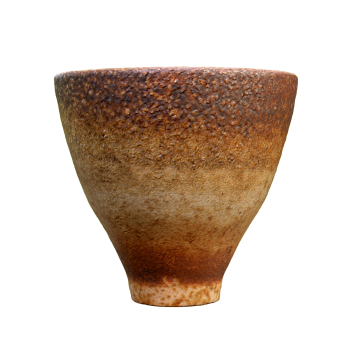
Ceramic Decorations from Tongguan Kiln Ceramic Research Institute

The ceramic decorations produced by the Tongguan Kiln Ceramic Research Institute represent the profound ceramic production tradition and artistic achievements of China's Tongguan Kiln. Tongguan Kiln is one of the famous ceramic kiln series in Chinese history, renowned for its exquisite craftsmanship, unique glaze colors, and exquisite decorations. It is usually handmade with high-quality clay, carefully designed and fired multiple times, and finally presents an artistic effect of bright colors and exquisite patterns. Every piece of work is the result of the craftsman's unique craftsmanship. These decorations, as carriers of culture, are not only favored domestically but also exported overseas, becoming an important way to spread Chinese ceramic art.
Cosmic Starry Sky Ceramic Cup

Cosmic Starry Sky Ceramic Cup

A ceramic artwork meticulously created by the renowned Chinese master of arts and crafts, Peng Wangqiu. With its unique design and exquisite craftsmanship, it showcases the profound cultural heritage and artistic charm of Tongguan Kiln. Usually, it combines traditional and modern elements, cleverly combining Chinese classical aesthetics with modern aesthetic concepts to create ceramic artworks that have both traditional charm and modern aesthetics. Known for its exquisite glaze and unique starry sky pattern, it is not only a practical daily item, but also a collection full of artistic sense. Exquisite skills and unique artistic style have been highly praised and loved by collectors and art enthusiasts both domestically and internationally.
Bird shaped vessels at the Minneapolis Museum of Art in the United States
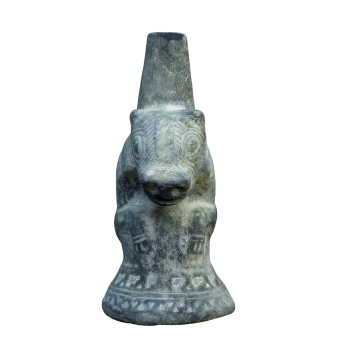
Bird shaped vessels at the Minneapolis Museum of Art in the United States

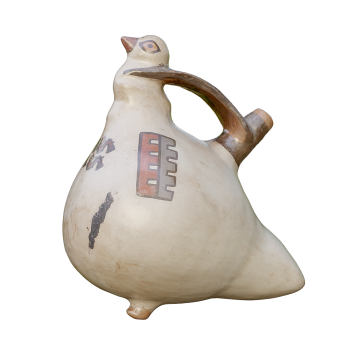
The bird shaped vessels made between 100 BC and 600 AD are now collected at the Minneapolis Museum of Art in the United States. It occupies an important position in ancient art, has practical functions, and often carries rich symbolic meanings and cultural values. The design reflects the ancient people's observation and imitation of the natural world, as well as their worship and respect for the characteristics of birds.. In many cultures, birds symbolize freedom, sky, spirit, or divinity, so these vessels may be used in religious ceremonies or as ceremonial objects to express social status. It showcases the superb skills of ancient craftsmen and allows us to glimpse the aesthetic taste and spiritual world of ancient society.
Chim ú - Lambayeque style ceramic bottle from Peru

Chim ú - Lambayeque style ceramic bottle from Peru

It is a cultural artwork originating from the northern coast of Peru, produced between approximately 1000 and 1470 AD. This ceramic bottle is renowned for its unique artistic style and exquisite craftsmanship, often adorned with rich patterns and symbolic images, reflecting the religious beliefs and daily life of the society at that time. In history, due to various historical reasons, some ceramic bottles have been lost overseas. It was once auctioned by W&H Peacock Auction Company in the UK, but fortunately, it was successfully recovered and returned to its original country in 2023. The return of cultural relics reflects the international community's emphasis and efforts on the protection of cultural heritage.
Statues of buried figures, dancers

Statues of buried figures, dancers

This cultural relic is a painted pottery piece called "Statue of a buried figure, depicting a dancer performing", created between 618-906 AD. This statue is currently housed in the Minneapolis Museum of Art in the United States. The height of this statue is about 20 centimeters. Painted pottery and white talc were used as materials. This statue was bequeathed to the Minneapolis Museum of Art by Alfred F. Piersbury. This statue represents the top ceramic technology of China from the 7th to the 10th century.
Burial figure statue pipa

Burial figure statue pipa

This cultural relic is a painted pottery piece called "Statue of a Buried Figure, depicting a musician playing", created between 618-906 AD. This statue is currently housed in the Minneapolis Museum of Art in the United States. The height of this statue is about 20 centimeters. Painted pottery and white talc were used as materials. This statue was bequeathed to the Minneapolis Museum of Art by Alfred F. Piersbury. This statue represents the top ceramic technology of China from the 7th to the 10th century.
Burial figures statue bamboo flute

Burial figures statue bamboo flute

This cultural relic is a painted pottery piece called "Statue of a Burial Figure, depicting a musician playing a bamboo flute", created between 618-906 AD. This statue is currently housed in the Minneapolis Museum of Art in the United States. The height of this statue is about 20 centimeters. Painted pottery and white talc were used as materials. This statue was bequeathed to the Minneapolis Museum of Art by Alfred F. Piersbury. This statue represents the top ceramic technology of China from the 7th to the 10th century.